Master the Grid in Sweet Fruit Burst 3D
Sweet Fruit Burst 3D swaps melons, berries and citrus tiles on a board that gives every piece weight and bounce, and those two properties change what a good swap looks like. These sweet fruit burst puzzle tips deal with the consequences.
How the physics change a swap
On a flat match-three grid a cleared tile is replaced instantly. On a board with physics it falls, and where it lands is a decision you made two moves ago.
The difference sounds cosmetic and is not. When fruit tiles have volume, a cleared gap does not simply pull the column straight down — pieces settle, roll fractionally toward an open side, and sometimes come to rest in a position no vertical drop would have produced. Boards built this way tend to have wells and shelves: places where the geometry funnels pieces in, and places where nothing ever arrives without being sent there deliberately.
Practically, that turns board reading into a question about slope rather than columns. Before a swap, look for the lowest open point in the region you are working. Anything you clear above it will end up near it. If the tile your stage quota needs is sitting on a shelf on the far side of the board, no amount of clearing in the middle will bring it down; you have to open a route.
Special pieces behave differently here too. A blast that removes a circular area on a flat grid removes a circle. On a physics board it removes a circle and then everything above the circle rearranges, which is why the same power-up produces wildly different results depending on where it fires. Low and central is predictable. High and off to one edge is guesswork.
Two special fruits detonated together produce a much larger clear than either alone. It is the single biggest swing available without a purchase, and it is worth holding a move or two to set up. Combining them at the top of the board wastes most of it.
Working a board in the right order
Most failed stages are lost to sequence rather than to a bad swap. Five rules, in the order they apply.
- Read the objective panel before touching anything. Points, quota, jelly and drops each want a different first move. A quota of eighteen limes wants you hunting limes from move one; a jelly clear wants you opening the corners while you still have moves to spare. Deciding after three swaps means those three swaps were random.
- Work the bottom half first. Every clear low on the board sets off secondary cascades as the pieces above resettle. The same clear near the top produces one match and a refill from empty space. This is the rule that survives every stage type on every board of this kind.
- Open the corners before the middle needs them. Corners are the last place pieces arrive and the first place a quota goes to die. If a stage counts a specific fruit and the corners are sealed with blockers, clear the blockers early, while a wasted move still costs nothing.
- Track moves remaining against objectives remaining. Divide what is left to collect by the moves you have. Above roughly three tiles per move, ordinary matches will not get there and you need a special piece; below it, steady swaps will. This one number tells you whether to keep playing safe or start building.
- Spend the big combination last, and low. Two special fruits detonated together clear a large part of the board. Held until the move counter is genuinely short, and fired into the lowest dense area, it usually finishes a stage. Fired early out of enthusiasm, it clears tiles you would have cleared anyway.
The five stage types, compared
Difficulty in this genre is not really about the tiles. It is about which of these five things the stage is asking for, because each has a different failure mode.
| Stage type | Primary objective | Relative difficulty | What actually decides it |
|---|---|---|---|
| Score attack | Reach a point target within a limit | Easy | Cascade length, not swap speed |
| Quota clear | Collect a set number of named fruits | Easy | Whether that fruit is still common late in the board |
| Jelly clear | Remove the coating beneath every tile | Medium | Reaching the two corners nothing falls into |
| Blocker break | Destroy crates or chains before moves run out | Hard | Spending specials on blockers instead of on points |
| Ingredient drop | Walk items down to the bottom row | Hard | Keeping the columns underneath them empty |
Difficulty ratings are this guide’s own reading of the five formats, not a figure published by any developer. Individual stages vary enormously within each type.
How this site is written and checked
Kavolunex is written by one person in Calgary. There is no editorial team, no panel of testers and no scoring system, and it would be dishonest to imply otherwise on a site this size.
What the pages contain is the behaviour of a board format, described from playing it: the way physics boards resettle, why the bottom half matters, what the five stage types actually demand. That kind of statement holds across builds and across titles, which is why it is what gets written here instead of stage numbers and solutions.
What the pages deliberately do not contain: star ratings, download counts, review scores, tier lists, or claims about how many titles have been tested. Those numbers either move weekly or cannot be verified by a reader, and a static page carrying them is stale the week after it is published.
Anything specific to a particular app — its price, whether it works offline, how large it is, whether it contains ads — belongs on that app’s store listing, and the listing is the only source worth trusting for it. Where a page here mentions such a detail, treat it as a practical indication and check the listing.
Each page carries the date its text was last reviewed. That date is a claim about the text, not about the games, which change on their own schedule.
A handbook for the five stage types
The site is free and will remain so. A screen is a poor place to keep a reference you need mid-stage, though, which is the only reason there is a printed version at all.
The Stage Type Handbook
Sixteen pages, one spread per stage type, written the same way as these pages: what the stage is really asking for, where it goes wrong, and what to do about it before the move counter gets short.
- A spread each for score attack, quota clear, jelly clear, blocker break and ingredient drop — failure mode first, remedy second.
- Slope diagrams for physics boards: where pieces actually settle, and which shelves nothing ever reaches on its own.
- The corner problem worked through on paper, with the two routes that open a sealed corner cheaply.
- The move arithmetic as a printed card, sized to sit under a phone without being covered by it.
- Two blank boards for sketching a stage you keep losing, which is more useful than it sounds.
Order it by email Terms of the order
One item, sold by a private individual rather than a business. There is no checkout on this domain, no payment page, and no card details are collected anywhere on it: you write, Michael Brown answers with transfer details, and the file follows once the transfer arrives. No sales tax is added and no invoice from a registered business is issued. If it never turns up, or turns up and will not open, say so and the money is returned in full.
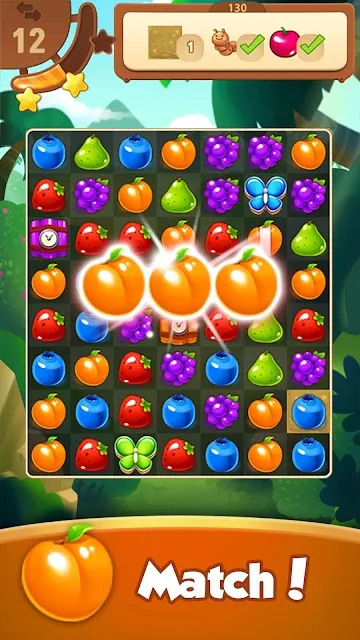
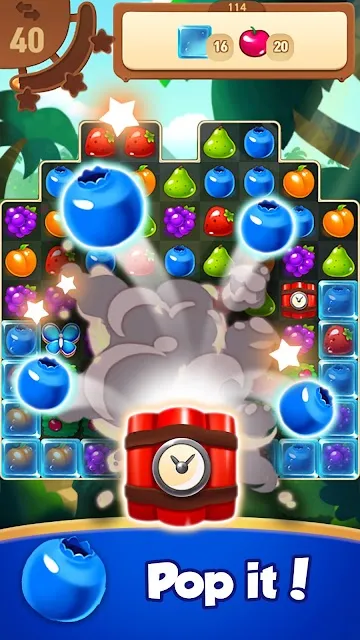
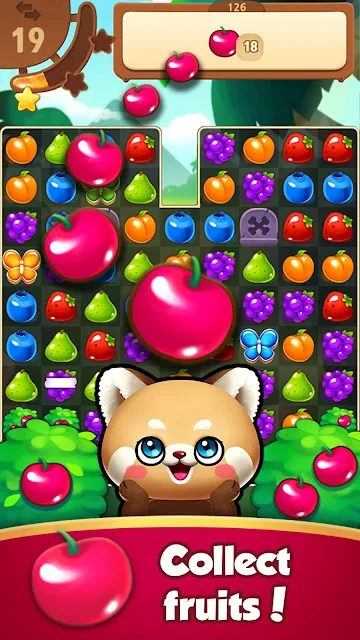
A board of this kind on Google Play
The method section says app-specific facts belong on the store listing, so here is the listing rather than a paraphrase of it. The labels below are the store’s own.
Fruits Master — Match 3, by SUPERBOX Inc
Open the listing on Google Play
Nothing is downloaded or installed from this site. Price, taxes and any fees are shown on Google Play at the next step, and the date above records when the labels were last read from here.
Write to us
[email protected]Email is the only contact channel on this site. There are no forms, no newsletter and no data collection — write in, and the reply goes to the address you wrote from and nowhere else.